Supportive Housing: An Important Piece of New Jersey’s Affordable Housing Strategy
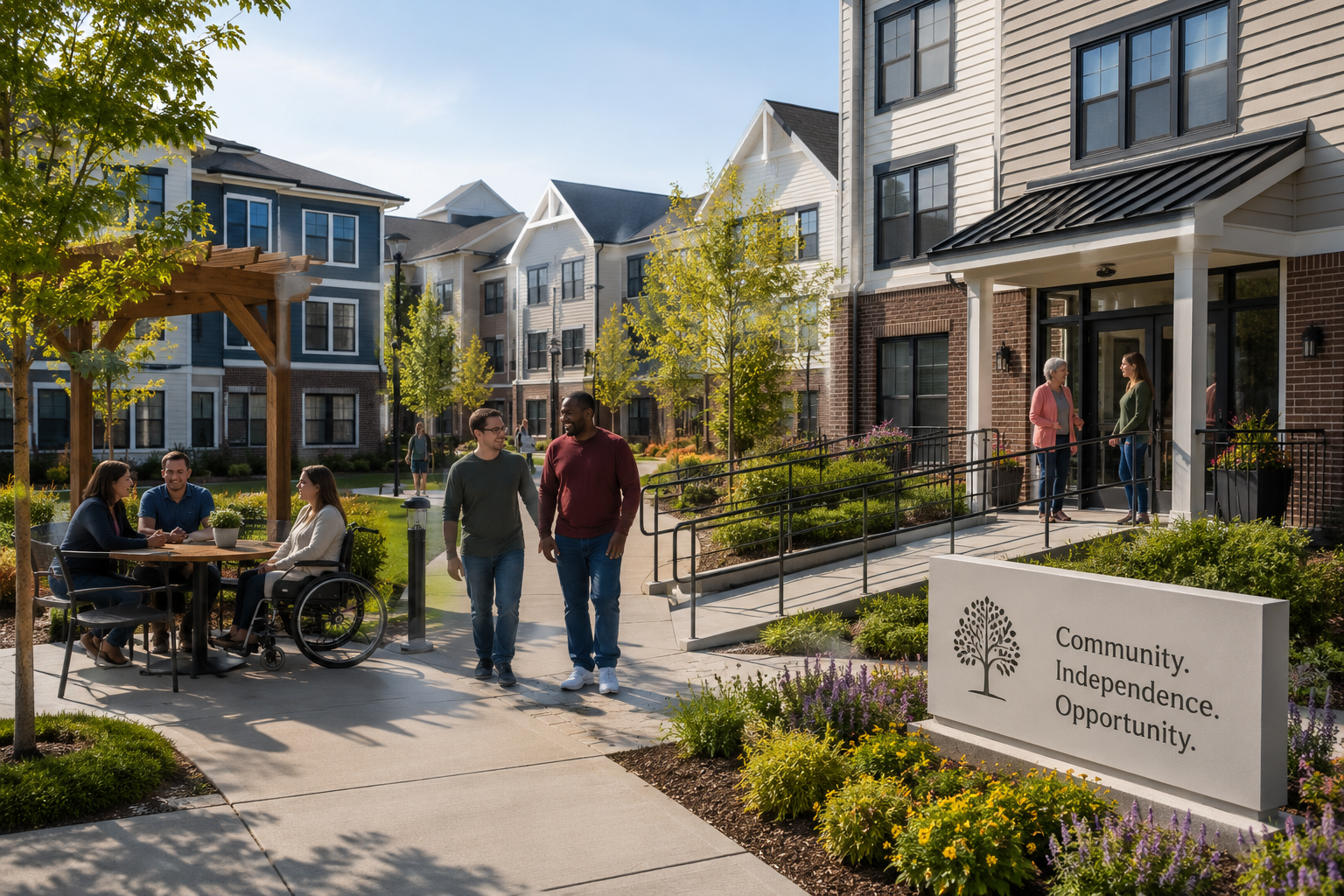
As municipalities across New Jersey prepare Housing Elements and Fair Share Plans to address their Fourth-Round affordable housing obligations, much of the discussion has centered on the number of affordable housing units that must be produced over the coming decade. ¹ While increasing the overall housing supply remains a priority, an equally important question is whether those units reflect the diverse housing needs of New Jersey’s residents.
One type of housing that deserves greater consideration is supportive housing for adults with intellectual and developmental disabilities (I/DD) and other special needs populations. As demand for community, based living grows, supportive housing can help address a demonstrated need while contributing to municipal affordable housing obligations.
Supportive housing does not replace traditional affordable housing. Rather, it complements it by serving residents whose housing needs extend beyond affordability alone.
Affordable Housing vs. Supportive Housing
Although supportive housing falls within the broader affordable housing framework, it serves a distinct purpose.
Affordable housing provides income, qualified households with housing at below market rates. Supportive housing combines affordable housing with individualized services that enable residents with special needs to live safely and at varying levels of independence within their communities.²
For adults with intellectual and developmental disabilities, supportive housing may include supervised apartments, community residences, or independent living arrangements. Services vary based on individual needs and may include case management, life skills training, transportation, employment assistance, and healthcare support.²
Importantly, the developer or property owner is generally not responsible for providing these services. Organizations approved by the New Jersey Division of Developmental Disabilities (DDD) provide or coordinate the care and support residents need. Depending on the project structure, a service provider may lease apartments from the property owner and manage the supportive services, while the property owner provides the housing and collects rent.
This structure allows developers to participate in supportive housing without assuming responsibility for specialized care. The developer provides the housing, the service organization provides the support, and residents are able to live more independently within the community.
Understanding the Growing Need
The need for supportive housing in New Jersey is measurable.
One of the clearest indicators is the Community Care Program (CCP) Priority Waiting List, administered by the New Jersey Division of Developmental Disabilities (DDD). The CCP provides Medicaid funded services that allow eligible adults with intellectual and developmental disabilities to live in community settings with appropriate support.³
To qualify for the Priority Waiting List, individuals must meet specific criteria. One qualifying condition is having a parent or primary caregiver who is 55 years of age or older. Other criteria include circumstances in which a caregiver can no longer provide care or an individual’s health or safety is at risk.⁴
In Fiscal Year 2026, 3,665 individuals were on the CCP Priority Waiting List, compared with 2,687 in Fiscal Year 2024 and 2,131 in Fiscal Year 2021. In five years, the list grew by more than 70 percent, despite the State continuing to fund placements. ³
The overall population receiving DDD services is also growing. The Division served 19,432 individuals in Fiscal Year 2018, compared with 28,783 in Fiscal Year 2026, an increase of nearly 48 percent.³
For municipalities and developers planning for future housing needs, these figures demonstrate a growing demand for community based housing for adults with intellectual and developmental disabilities.
Is There Funding to Meet the Demand?
Supportive housing requires funding not only for housing development, but also for rental assistance and ongoing services.
New Jersey uses several funding sources to meet these needs. The New Jersey Housing and Mortgage Finance Agency’s Special Needs Housing Trust Fund provides capital financing for permanent supportive housing and community residences. However, rental assistance and supportive services are funded separately through programs administered by the Division of Developmental Disabilities and New Jersey’s Medicaid system.³ ⁵ ⁶ Many individuals also receive Social Security Disability Insurance (SSDI) which can also be utilized to support their care.
The State is also increasing its investment. In its Fiscal Year 2027 budget testimony, the New Jersey Department of Human Services reported that the Division of Developmental Disabilities supports more than 30,000 adults in community settings and is receiving $154 million in new funding to address growing demand and move additional individuals off the Community Care Program waiting list.⁷
Meeting the demand for supportive housing therefore requires both appropriate housing and sufficient funding for the services residents need. As funding for community-based services expands, the availability of appropriate housing will remain an important part of meeting that demand.
Supportive Housing and Affordable Housing Compliance
Supportive housing can also play an important role in a municipality’s affordable housing strategy. All individuals receiving government benefits are classified as very low income and are eligible to occupy affordable housing units.
Under New Jersey’s affordable housing framework, qualifying supportive housing may receive favorable credit treatment. Depending on the project and applicable regulations, certain community residences may receive affordable housing credit based on the number of eligible bedrooms rather than the number of dwelling units.¹ ⁵
A project our firm was involved with demonstrates the impact. The development had an affordable housing obligation of 11 credits. Rather than providing 11 affordable units, the obligation was satisfied through six supportive housing units consisting of five two-bedroom units and one one-bedroom unit, for a total of 11 eligible bedrooms. As a result, five units that otherwise would have been designated as affordable housing could remain at a market rate.
For developers, this can have a meaningful impact on unit mix and project feasibility. For municipalities, it provides another way to meet affordable housing obligations while creating housing for adults with special needs.
Because available credits depend on the project structure and applicable requirements, municipalities and developers should coordinate with affordable housing planners, legal counsel, service providers, and design professionals early in the planning process.
Planning Successful Supportive Housing Developments
Like any affordable housing project, successful supportive housing begins with careful planning.
Project teams must consider not only zoning, site planning, accessibility, and building code requirements, but also how the physical environment supports residents and service providers. Building layout, unit design, common spaces, staffing needs, supportive technology, transportation access, and operational considerations all influence the long-term success of supportive housing development.
Early collaboration among municipalities, developers, service providers, architects, engineers, and affordable housing professionals is essential to creating projects that meet regulatory requirements while serving residents effectively.
Looking Ahead
As New Jersey continues implementing its Fourth-Round affordable housing obligations, supportive housing should remain part of the broader affordable housing conversation.¹ Traditional affordable housing will continue to play a critical role in addressing the state’s housing shortage, while supportive housing can address the needs of adults with intellectual and developmental disabilities who require community-based services.
For municipalities, supportive housing can help address a growing need while advancing affordable housing objectives. For developers, it creates opportunities to partner with municipalities and service organizations on projects that are responsive to community needs and aligned with New Jersey’s affordable housing framework.
As with all successful affordable housing initiatives, thoughtful planning, early collaboration, and an understanding of applicable regulations are key to creating projects that provide lasting value for residents and their communities.
About the author:
Matthew B. Jarmel, AIA, MBA is an architect and real estate developer. He is President and CEO of Jarmel Kizel Architects and Engineers, Inc. He has an adult son Benjamin with autism. As a parent of a young adult with autism Matthew frequently worries about his son’s care when he is no longer able to care for him. He has become an expert on supportive housing design and regulations related to supportive housing development. Currently he is an executive board member of the JSDD a DDD approved supporting housing provider.
Sources
1. New Jersey Department of Community Affairs. (2024). Affordable Housing in New Jersey: Fourth Round Guidance and Implementation. https://www.nj.gov/dca/
2. Supportive Housing Association of New Jersey. (2026). Supportive Housing Policy Recommendations and organizational resources. https://www.shanj.org/
3. New Jersey Department of Human Services, Division of Developmental Disabilities. (2025, June). DDD Update Webinar: Fiscal Year 2026 Community Care Program and Waiting List Update. https://www.nj.gov/humanservices/ddd/assets/documents/news/update-webinar-2025-06-26.pdf
4. New Jersey Department of Human Services. N.J.A.C. 10:46C Community Care Program Waiting List Procedures. https://www.nj.gov/humanservices/notices/documents/rules-and-regulations/NJAC%2010_46C%20COMMUNITY%20CARE%20PROGRAM%20WAITING%20LIST%20PROCEDURES.PDF
5. New Jersey Legislature. (2024). P.L. 2024, c.2 (Affordable Housing Reform Act). https://pub.njleg.state.nj.us/
5. New Jersey Housing and Mortgage Finance Agency. (n.d.). Supportive housing: Special Needs Housing Trust Fund. New Jersey Department of Community Affairs.
6. New Jersey Department of Human Services, Division of Developmental Disabilities. (n.d.). Housing assistance.
7. New Jersey Department of Human Services. (2026, May 6). Commissioner Cha 2026 Legislative Budget Committee testimony.